

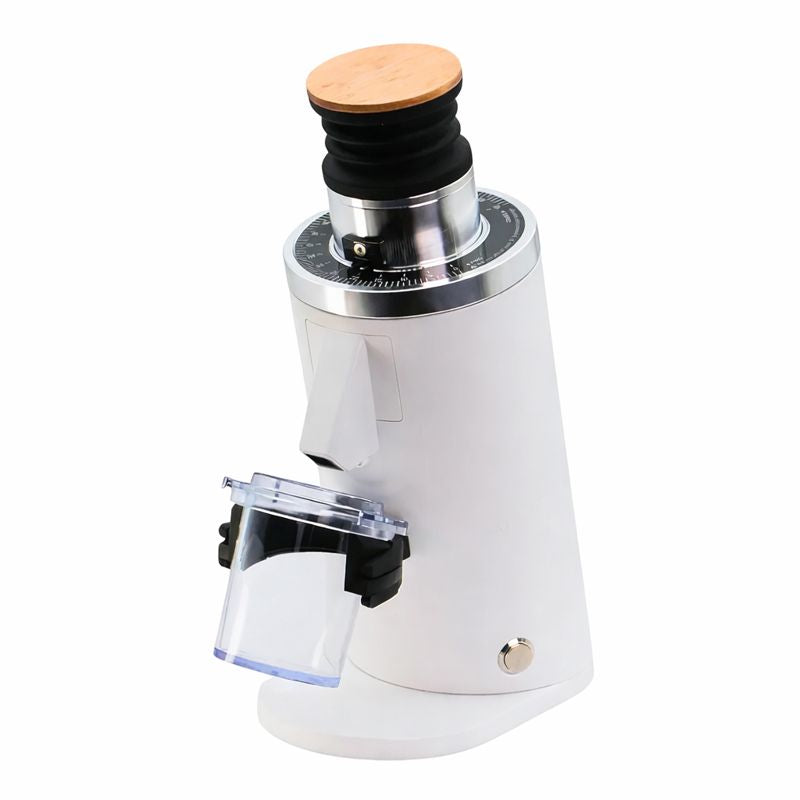
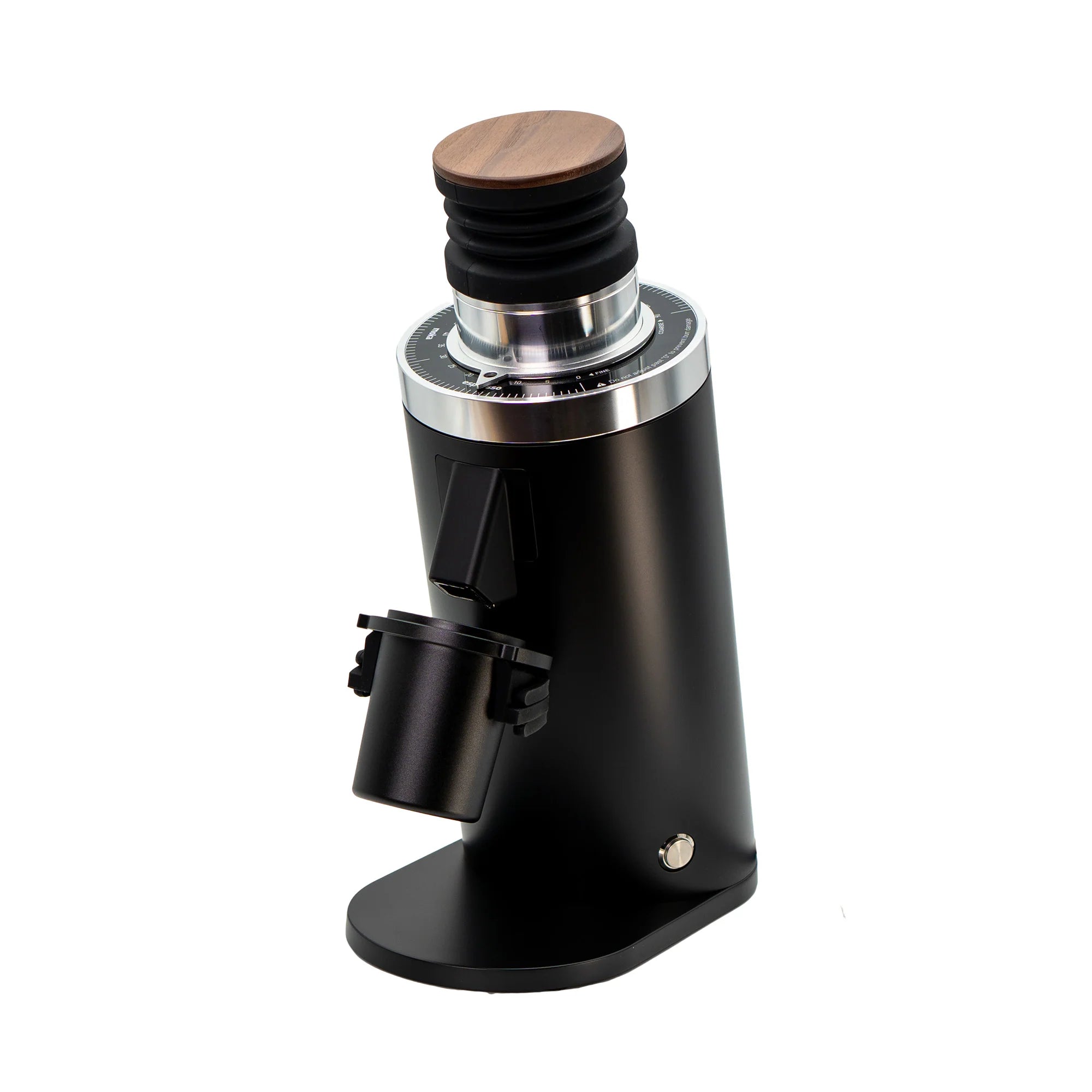
The DF54 and DF64 Gen 2 are two popular single-dose coffee grinders for home baristas seeking strong performance without moving into commercial-sized equipment. Both use flat burrs, stepless micrometric adjustment and a low-retention workflow, but they differ meaningfully in size, grinding speed, price and burr-upgrade potential.
Short answer: Choose the DF54 V4 if compact size and value are your priorities and the smaller, though growing, 54 mm burr ecosystem meets your needs. Choose the DF64 Gen 2 v2.7 if faster grinding, a more powerful motor and access to the much wider 64 mm burr ecosystem justify the additional cost. Both are highly capable for espresso and filter brewing; the DF64’s principal advantages are speed and long-term customisation rather than burr diameter automatically producing better coffee.
DF54 vs DF64 Gen 2 at a glance
The comparison below focuses primarily on the current DF54 V4 and DF64 Gen 2 v2.7. Grind Logic may also have DF54 V3 configurations available; the V3 and V4 use the same core grinding platform, while the V4 introduces a slightly widened exit chute.
| Comparison |
|
|
|---|---|---|
| Current Revision |
DF54 V4 DF54 V3 may also be available |
DF64 Gen 2 v2.7 |
| Current Pricing |
DF54 V4: $419 stainless steel / $479 Red Titanium DF54 V3 stainless steel: from $399 where available |
$619 stainless steel / $719 Red Titanium |
| Burr Platform | 54 mm flat burrs | 64 mm flat burrs |
| Burr Options | Stainless steel, Red Titanium-coated and a growing selection of alternative 54 mm geometries | Stainless steel, Red Titanium-coated and a broad selection of aftermarket 64 mm burrs, including SSP |
| Motor | AC 150 W / approximately 1400 RPM / 220 V / 50 Hz | AC 250 W / approximately 1400 RPM / 220 V / 50 Hz |
| Relative Grinding Speed | Slower than the DF64 Gen 2, but well suited to normal home single-dosing | Faster throughput, particularly useful when preparing several doses |
| Approx. Grind Range | Approximately 110–900 µm | Approximately 180–1050 µm |
| Typical Retention | Often below 0.4 g in typical use | Often below 0.3 g in typical use |
|
Dimensions (W × D × H) |
11.4 × 17.8 × 30.5 cm | 13.2 × 25.4 × 30.5 cm |
| Weight | 4.5 kg | 6.8 kg |
| Best Suited To | Home users prioritising value, compact dimensions and capable stock-burr performance | Home users prioritising speed, a more powerful motor and long-term burr customisation |


Prices were checked in August 2026 and may vary according to burr option or promotion. Grind-range figures are approximate reference measurements rather than fixed mechanical limits. Results and suitable settings can vary with burr geometry, alignment, grinder calibration, coffee, roast level and measurement method.
What do the DF54 and DF64 Gen 2 have in common?
Both grinders are designed around a similar home single-dose workflow. Rather than storing coffee in a large hopper, you weigh each dose before grinding and use the included bellows to help clear remaining grounds. This makes it easier to change between different coffees while limiting carry-over from the previous dose.
Both models also include:
- Flat burrs suitable for espresso through to filter and immersion brewing
- Stepless micrometric adjustment for precise espresso dial-in
- A plasma ioniser and metal declumper to help manage static and stray grounds
- A direct grounds path and bellows-assisted low-retention workflow
- Approximately 1400 RPM operating speed
- AU/NZ plug compatibility when supplied by Grind Logic
Both can also provide strong setting repeatability once dialled in. The decision is therefore less about whether one grinder is capable of producing espresso or filter coffee and more about price, physical size, throughput and how much burr customisation you expect to want.
Who should choose the DF54?
The DF54 is the more compact and affordable grinder. Its narrow 11.4 cm width and comparatively shallow body make it particularly well suited to smaller kitchens, crowded benchtops and minimalist coffee stations.
Its 54 mm flat burrs are capable of producing balanced results across espresso and filter brewing. Although the DF54 grinds more slowly than the DF64 Gen 2, the difference is unlikely to be a major limitation for most home users preparing one or two doses at a time.
The DF54 is likely to be the better choice if:
- You want to keep the total cost of your coffee setup down
- Benchtop space is limited
- You mainly expect to use the supplied burrs
- You want a capable first serious espresso grinder
- You prepare a relatively small number of coffees at a time
- You want espresso and filter capability without paying for the broader 64 mm ecosystem
The DF54 should not be viewed only as a temporary beginner grinder. For users who are happy with its speed and available burr options, it can remain a highly capable long-term home grinder.
Who should choose the DF64 Gen 2?
The DF64 Gen 2 v2.7 combines a larger 64 mm burr platform with a 250 W motor. This gives it faster throughput and additional capacity while retaining a relatively compact footprint for a grinder of its size.
Its most important long-term advantage is access to the extensive 64 mm aftermarket burr ecosystem. Users can choose from burr geometries intended to emphasise different combinations of body, clarity, sweetness and versatility rather than replacing the entire grinder as their preferences develop.
The DF64 Gen 2 is likely to be the better choice if:
- You want faster grinding or regularly prepare several doses
- You intend to experiment with different burr geometries
- You want access to the widest selection of aftermarket burrs
- You are comfortable with its greater depth, weight and price
- You want a grinder platform that can be refined as your brewing preferences evolve
Available upgrades include SSP 64 mm burrs designed around different espresso and filter flavour priorities.
Does the DF64 Gen 2 produce better coffee?
Not automatically. Both grinders are capable of producing excellent espresso and filter coffee with their standard burrs. Burr diameter can influence grinding speed and the range of compatible burr sets, but it does not determine flavour quality by itself.
Burr geometry, grinder alignment, coffee, roast level and brewing technique all influence the resulting grind distribution and cup profile. As explained in our guide to burr geometry and coating, geometry generally has a more direct influence on characteristics such as body, clarity and flavour separation than either burr diameter or surface coating alone.
With the stock burrs, many home users may find the practical cup-quality difference smaller than the price difference between the grinders. The stronger reason to choose the DF64 is that its 64 mm platform gives you considerably more ways to change the grinder’s flavour characteristics later.
If choosing between stainless steel and Red Titanium-coated burrs, the coating should primarily be viewed as a durability upgrade. For a more substantial change in cup profile, changing burr geometry is generally more relevant.
Which grinder is better for espresso and filter coffee?
Espresso
Both grinders offer the stepless adjustment required for precise espresso dial-in and can be paired with most domestic espresso machines.
The DF54 is particularly compelling for users who want capable espresso performance at a lower price. If you mainly drink milk-based coffee or prefer balanced espresso from the supplied burrs, it may provide everything you need.
The DF64 Gen 2 becomes more compelling if you want faster grinding or expect to experiment with alternative burr geometries for straight espresso, lighter roasts or particular combinations of clarity, sweetness and body.
Filter and immersion brewing
Both grinders can cover pour-over, batch-style filter, AeroPress, French press and cold brew ranges. Their single-dose design also makes it practical to change coffee or brewing method without keeping beans in a hopper.
The DF54 is a compact and cost-effective all-rounder. The DF64 offers the stronger upgrade path if you eventually want a filter-focused or multipurpose 64 mm burr geometry. Consult the DF54 grind settings guide or DF64 Gen 2 grind settings guide for approximate starting ranges.
Is the DF64 Gen 2 worth the additional cost?
The DF64 Gen 2 is worth considering when you can identify a practical use for its faster throughput, more powerful motor or extensive 64 mm burr compatibility. These are meaningful advantages for enthusiasts who expect their preferences to evolve or who want to experiment with different burr geometries.
If those features are unlikely to change your everyday workflow, the DF54 generally provides stronger value. Spending more on the DF64 does not automatically improve every cup, and the DF54’s stock configuration is already capable of serving many home users for the long term.
Buying a DF54 or DF64 Gen 2 in Australia or New Zealand
Grind Logic supplies both grinders with an Australian and New Zealand Type I plug. Grinders are backed by local Australian product support and a 12-month in-house warranty, with compatible replacement parts, burrs and DF-series accessories available through Grind Logic.
Free standard delivery is included within Australia and to New Zealand. Eligible purchases are also covered by Grind Logic’s 60-day change-of-mind return policy. Check the relevant product page for current pricing, burr configurations, availability and full conditions.
Final verdict: DF54 or DF64 Gen 2?
Choose the DF54 if you want the more compact and cost-effective grinder and are comfortable with the smaller 54 mm burr ecosystem. Choose the DF64 Gen 2 if faster grinding and access to the extensive 64 mm burr ecosystem are important to you. The DF64 provides additional speed and long-term customisation, while the DF54 delivers the core performance most home baristas need at a lower price.
Getting started with your grinder
Once you have chosen a grinder, see our DF54 and DF64 Gen 2 espresso dial-in guide for practical advice on adjusting grind size according to shot flow and taste.
For guidance on safe adjustments, chute cleaning and routine upkeep, read our DF54 and DF64 Gen 2 care and maintenance guide.
